Hardness vs. Cleavage in Diamonds: Beauty, Strength & Hidden Vulnerability
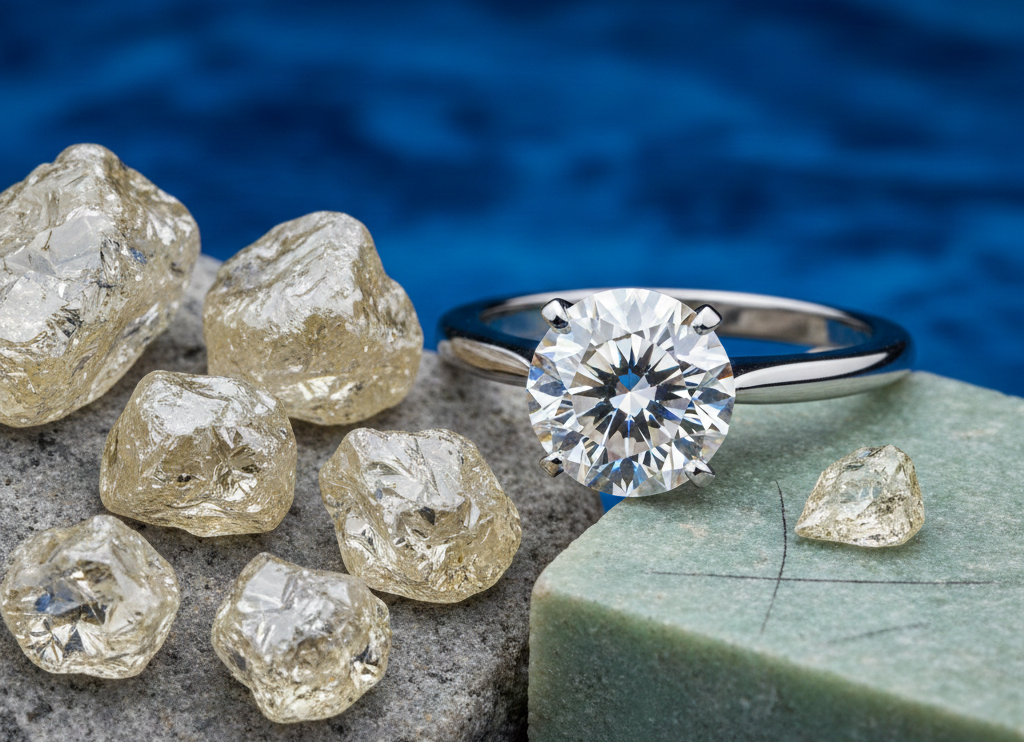
When purchasing a diamond, many people hear that it is “the hardest material on Earth.” While this is true, it’s only part of the story. From a gemological perspective, two different physical properties define how a diamond behaves: hardness and cleavage.
Hardness
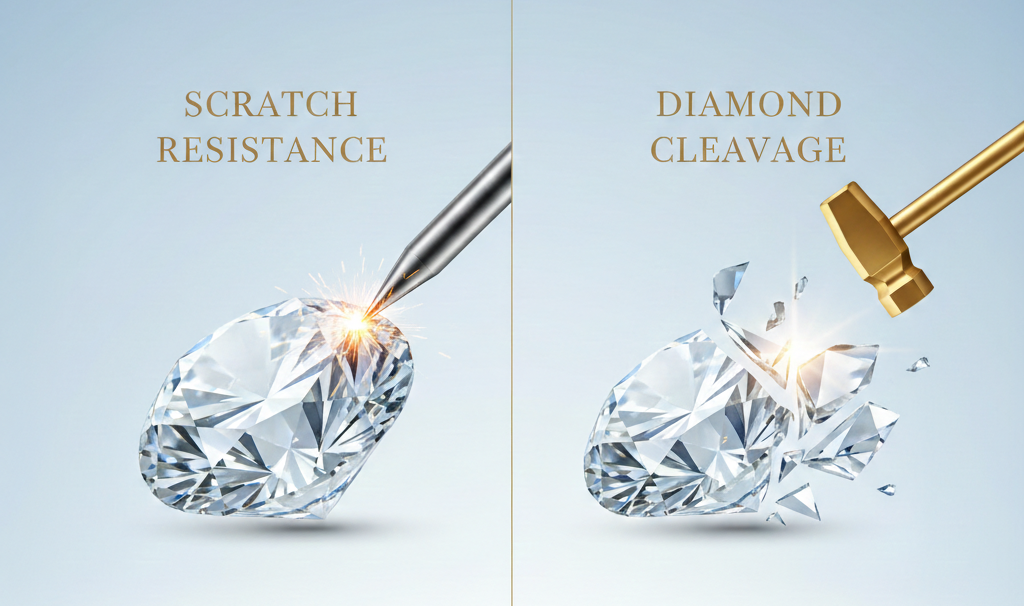
Hardness measures a mineral’s resistance to scratching. Diamonds rank 10 on the Mohs scale, making them harder than any other natural gemstone. This exceptional hardness is why diamonds maintain their polish, resist surface wear, and are ideal for everyday jewelry such as engagement rings.
Cleavage
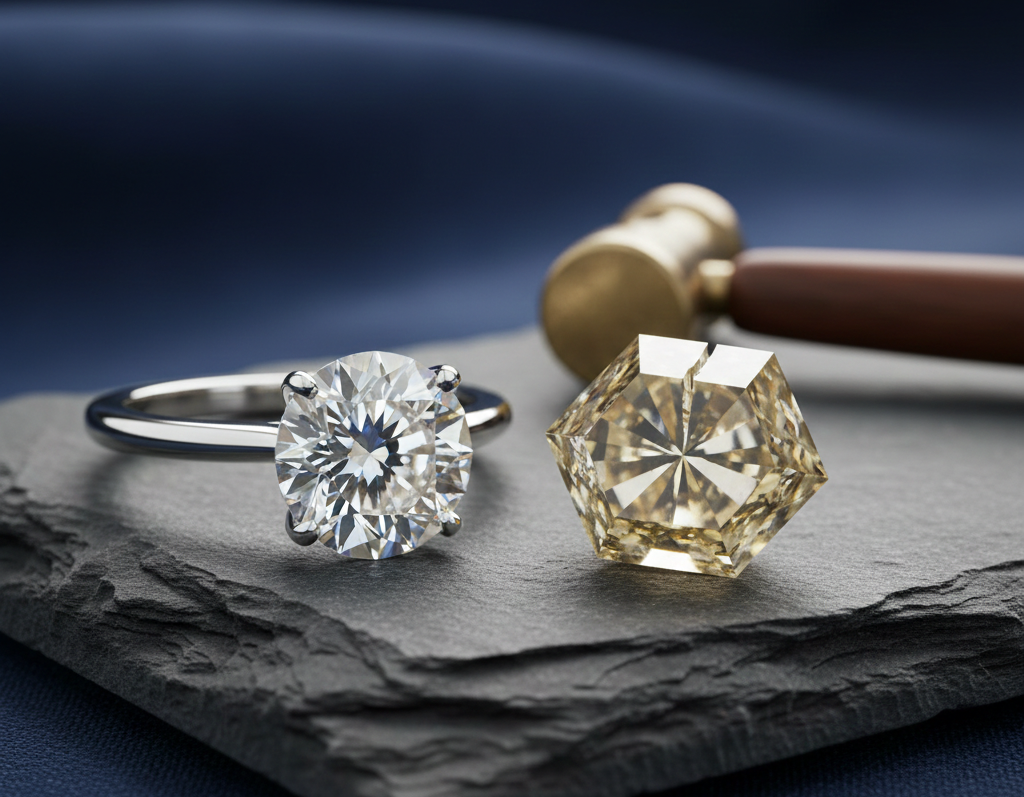
Cleavage, however, refers to how a crystal can break along specific internal atomic planes. Diamonds have perfect octahedral cleavage in four directions. This means that, despite their unmatched hardness, diamonds can split if subjected to a sharp impact at the right angle.
Why this matters when buying a diamond
A diamond is highly scratch-resistant, so it keeps its brilliance over time. It is durable for daily wear, but not indestructible.
A strong blow (for example, hitting a hard surface at the wrong angle) can cause chipping due to cleavage.
Proper setting design and mindful wear help protect the stone.